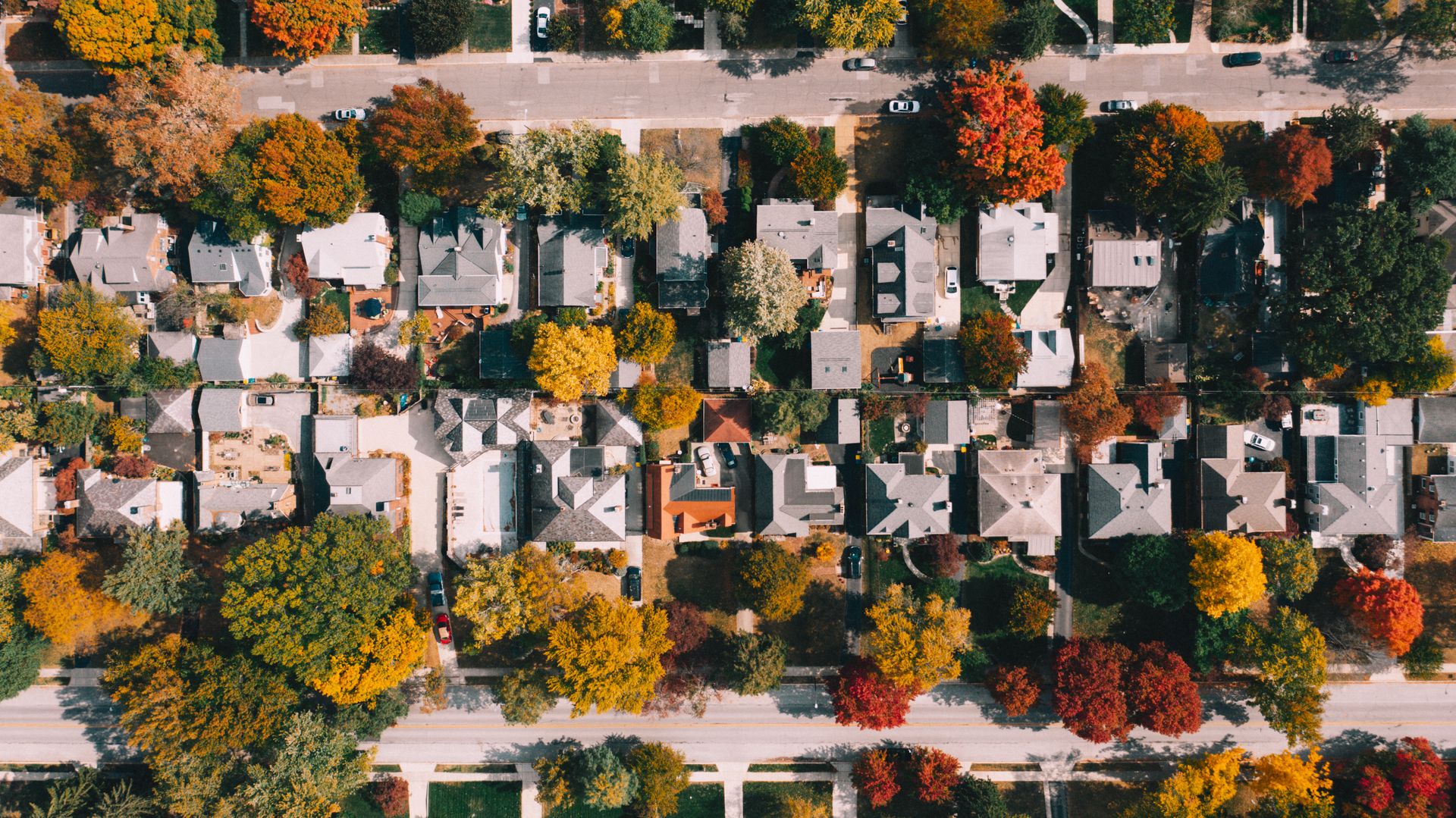
Real estate farming works best when you pick the right neighborhood before you spend a dollar on mail. A good farm area has enough homes selling each year to support your goals, prices that make the math work, and room for you to become the agent people recognize.
A poor choice is harder to spot at first. You can send beautiful postcards for a year to a neighborhood where almost no one moves, or where another agent already owns the conversation, and end up wondering why the phone isn’t ringing.
At 23 Window Media, we help agents across the country build and run neighborhood farming programs, and the agents who see the steadiest results usually put careful thought into this first step. Below is how we suggest evaluating a potential farm area, with a few current numbers to keep in mind.
What makes a good real estate farming neighborhood?
Real estate farming means marketing consistently to one defined group of homes so that when those owners decide to sell, your name is the first one they think of. The marketing matters, but the neighborhood you choose sets the ceiling on what the marketing can do.
The main things to weigh are:
- Turnover rate, meaning how many homes sell each year compared to the total number of homes
- Price point and commission potential, and whether the income justifies the cost and time
- Competition from other agents already farming the area
- Your connection to the neighborhood and how naturally you can talk about it
- Size, so the area fits your budget and you can stay consistent
No neighborhood scores perfectly on all five. The goal is to find one that does well on the first two and doesn’t have a serious problem with the other three.
How do you figure out a neighborhood’s turnover rate?
Turnover rate is the first number to check, because it tells you how many opportunities exist each year. The formula is simple. Take the number of homes sold in the neighborhood over the last 12 months and divide it by the total number of homes.
You can pull sales from your MLS. For the total number of homes, a title company rep, your county assessor’s records, or a mailing list provider can usually give you a count for a set of streets or a subdivision.
It helps to know what “normal” looks like right now. Turnover across the country has been unusually low. A Redfin analysis of home turnover found that only about 28 out of every 1,000 U.S. homes changed hands in the first nine months of 2025, the lowest rate in at least 30 years. Redfin points to affordability and homeowners holding on to low mortgage rates as the main reasons.
People are also staying in their homes longer. In NAR’s 2025 Profile of Home Buyers and Sellers, sellers had owned their homes for a median of 11 years before selling, an all-time high for the report.
Because the whole market has slowed, a turnover number that would have looked weak a few years ago might be reasonable today. Compare several neighborhoods side by side against your local market and pick the ones that move more often than the areas around them. Look at three to five years of sales if you can, so one unusual year doesn’t mislead you.
A few things tend to push turnover up:
- A mix of long-time owners who may be downsizing and younger families who may outgrow their homes
- Homes that are a natural “step up” or “step down” for people already living nearby
- A strong school district or location that keeps buyer demand steady
- A good share of non-owner-occupied homes (we covered this in our post on absentee owners in real estate marketing)
Gated luxury enclaves and neighborhoods full of recent buyers often turn over slowly. They can still be good farms, but you’ll need patience and a longer budget.
Does the price point support your real estate farming budget?
Once you know how many homes sell each year, you can estimate what the farm could be worth to you. This is where our free Potential Income Calculator is useful. You enter the number of homes, the turnover rate, the share of listings you expect to win, the average price, and your commission rate, and it estimates your potential annual income from that area.
Here’s a simple example. Say a neighborhood has 500 homes and a 5% turnover rate, so about 25 homes sell each year. If you earn 10% of those listings, that’s two or three sales. At an average price of $1.5 million and a 2.5% commission, each sale brings in about $37,500 before splits, or somewhere around $75,000 to $110,000 a year from that farm.
Run the same numbers for two or three candidate neighborhoods. You may find that a smaller, higher-priced area beats a bigger one with more sales, or the other way around. Then compare that estimate to what a year of consistent marketing will cost. A farm doesn’t need to pay for itself in the first few months, but the long-term math should make sense.
Be conservative with your expected listing share, especially in year one. Winning 10% or more of the listings in a neighborhood usually takes time and steady effort.
How much competition is already in the area?
Look at who is selling homes in the neighborhood now. Pull the last two or three years of sales from your MLS and note the listing agent on each one. If one agent has a large share of the listings and has been mailing the area for years, you’ll be up against a lot of built-up recognition.
Some competition is fine and even a good sign, since it means the area is worth farming. What you want to avoid is a neighborhood where one or two agents clearly dominate and are still very active.
A few ways to get a feel for it:
- Ask friends or past clients who live there what real estate mail they get
- Drive the neighborhood and see whose signs you notice
- Search the neighborhood name online and see which agents show up
If an area has lots of sales spread across many agents with no clear leader, that’s often a good opportunity.
Why does your connection to the neighborhood matter?
Homeowners can tell when an agent knows their area. If you live there, used to live there, have kids in the local schools, or have already sold several homes nearby, you have an easier time writing about the neighborhood and talking with people you meet at the coffee shop or the park.
This matters more than it might seem. According to Virginia REALTORS’ summary of NAR’s 2025 findings, 66% of sellers found their agent through a referral or went back to an agent they’d worked with before. In a farm area, many of those referrals come from neighbors. When your mail is paired with face-to-face connections, people are more likely to mention your name when a friend down the street is thinking about selling.
A personal connection isn’t required. Many agents successfully farm areas they’ve never lived in. It just means you’ll want to spend extra time learning the neighborhood’s history, amenities, and market before you start.
How big should a real estate farm area be?
The right size depends on your budget and how often you plan to reach people. There’s no fixed number, but many agents start somewhere between a few hundred and a thousand homes. Luxury agents can often work with fewer homes because each sale is worth more.
The most common mistake we see is choosing an area that’s too big. An agent picks 3,000 homes, mails them twice, runs out of budget, and stops. It’s much better to reach 400 homes every month for two years than 3,000 homes a few times.
To size your farm, start with what you can comfortably spend each month for at least 18 to 24 months. Divide that by your cost per home per mailing, and that gives you a realistic ceiling. If the neighborhood you like is larger than that, pick a clear section of it, like one subdivision or a group of streets, and expand later.
Related: Mailing Lists for Realtors: How to Target and Convert Seller Leads
What should you do once you’ve picked your farm area?
After you choose a neighborhood, the work shifts to showing up consistently. Homeowners who stay in their homes for a decade or more may get your mail for a long time before they need an agent. The goal during that time is to become familiar and useful to them.
A solid farming program usually includes:
- Monthly market updates. Market reports that show recent sales, prices, and trends for the neighborhood tend to get kept longer than a basic ad, because homeowners want to know what their home is worth.
- Just listed and just sold mail. Property postcards let the whole neighborhood see your activity every time you list or sell nearby.
- Some in-person contact. Open houses, community events, and door hangers help put a face to the name. Our post on door hangers for realtors covers how to use them well.
- A matching online presence. Many homeowners will look you up after getting your mail, so your website and social media should look consistent with it.
Plan to give a new farm at least 12 to 24 months before you judge it. Track where your calls and listings come from so you can see what’s working. If you do the work to choose the right area up front, you’ll feel more confident sticking with it through the slow early months.
Many of the agents we work with would rather spend their time with clients than on designing and mailing pieces every month. That’s the main reason agents choose 23 Window Media. Our team handles the planning, design, printing, and delivery, and you approve what goes out. You can see everything we offer, from print to digital, on our solutions page.
Conclusion
Choosing a farm area is one of the most important decisions in real estate farming. Check the turnover rate first, run the income numbers for a few neighborhoods, look at who is already selling there, and think about where you have a natural connection. Then choose a size you can afford to market every month for the long haul.
If you’d like help picking a neighborhood and building a plan to farm it, become a 23 Window Media member and our team will get started with you. If you have questions first, contact us and we’ll be glad to talk it through.